
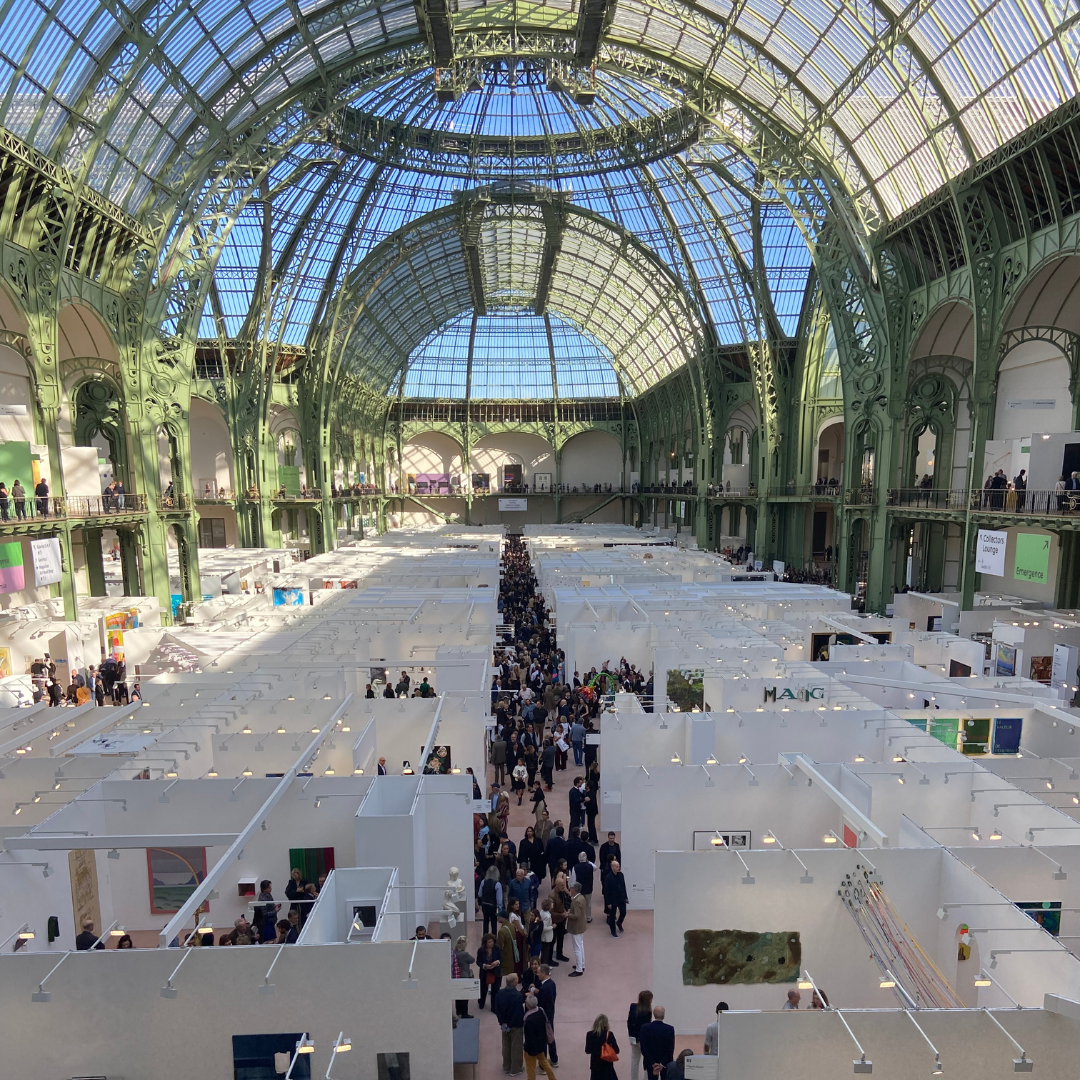
Last week, the art world was buzzing with a familiar question: London or Paris? While the debate may have dominated media headlines, for galleries and collectors, the focus was less on comparing cities and more on finding the best art deals and standout pieces. Each fair had its own flavor, appealing to different audiences, artists, and collectors – but how did Frieze London and Art Basel Paris really stack up against each other?
Frieze London, known for its edgier and more contemporary focus, delivered an exciting array of emerging artists and innovative presentations. The fair had a regional feel, with much of the attention coming from UK-based collectors and galleries, but that didn’t stop it from making waves internationally. Strong sales were reported, denying all doomsdays as reported by ARTnews, and the energy on the ground was palpable, not just in the booths but also at the afterparties that kept the city buzzing.
Across the Channel, Art Basel Paris brought its own distinct energy. As expected, Paris brought out the crème de la crème of the art world. Hauser & Wirth offered a Kazimir Malevich (purportedly selling for more than $35m USD), and the same gallery sold a Louise Bourgeois sculpture for a staggering $20 million. Masterpieces like these defined the Parisian fair, attracting collectors from across the globe—Americans, Asians, and European elites were all in attendance.
While Art Basel Paris still had its fair share of brand collaborations and glitzy parties, it leaned into its reputation for hosting serious, discerning collectors. The vibe was more intimate, with smaller gallery dinners replacing large-scale events, giving collectors the opportunity to engage deeply with the artworks.
Interestingly, the talk on-the-ground wasn’t so much about London vs. Paris as it was about the difference between Frieze and Art Basel as brands. Frieze London felt like a celebration of what’s new and now, an experimental playground for cutting-edge art and emerging artists. Art Basel Paris, by contrast, was the epitome of refinement, showcasing masterpieces that reflected the highest echelon of the market.
For collectors, the choice wasn’t about which city had better weather (although Paris did enjoy sunnier days—until the rain caused leaks in the Grand Palais!), but about which fair aligned with their collecting preferences. Whether one preferred edgy contemporary works or timeless masterpieces, both fairs had something to offer.
One of the hottest topics at both fairs was the question of scheduling. Will these fairs continue to be held back-to-back, forcing collectors and galleries to hop from one city to the next? Or will we see a shift in the calendar? Hauser & Wirth’s President, Marc Payot, coined this tension as the “Paris effect,” reflecting the growing pull of Paris in the global art market.
As we look ahead, the conversation may not center so much on Frieze vs. Art Basel, or London vs. Paris, but rather how these two powerhouses can coexist in an increasingly competitive art landscape.
For now, collectors can be content knowing that whether in London or Paris, the art market is alive and well, offering diverse experiences for all.
Next stop… Miami!


